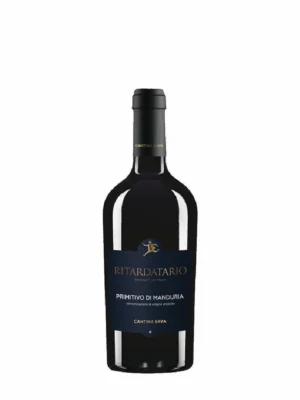
In the Sava area, the climate is typically Mediterranean with long, hot summers, but constantly influenced by sea breezes from two seas, which cool the vineyards. Here the area is predominantly flat and characterized by brick-red soils rich in iron oxides from the underlying limestone that give our wines great aromatic complexity.
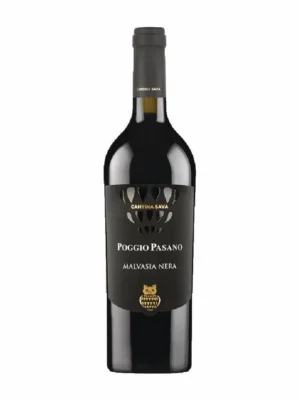
In Cantina Sava have selected the oldest primitivo saplings and, bunch by bunch, all our grapes are handpicked and brought intact and healthy to the cellar; where they are then handed over to expert winemakers, in charge of the scrupulous vinification and aging and prepare it for a long bottle life. The strength of these wines comes from the ability to dose the three main ingredients of the Salento wine tradition: Sun, sea and passion.
In the Sava area, the climate is typically Mediterranean with long, hot summers, but constantly influenced by sea breezes from two seas, which cool the vineyards. Here the area is predominantly flat and characterized by brick-red soils rich in iron oxides from the underlying limestone that give our wines great aromatic complexity.
In Cantina Sava have selected the oldest primitivo saplings and, bunch by bunch, all our grapes are handpicked and brought intact and healthy to the cellar; where they are then handed over to expert winemakers, in charge of the scrupulous vinification and aging and prepare it for a long bottle life. The strength of these wines comes from the ability to dose the three main ingredients of the Salento wine tradition: Sun, sea and passion.
In the heart of Bolognano, a small town in Abruzzo region, Zaccagnini company has been established in 1978. Starting from a family-run business, the Winery has grown rapidly and steadily with the goal of “absolute quality, from cluster to glass”, reaching the current condition of an international reality with more than 300 hectares of beautiful vineyards, well-kept and monitored at every production stage. Excellence, passion and devotion to job have made Tralcetto’s wines the pride of Abruzzi’s wine production appreciated all over the world.
With the Tralcetto Rosè Zaccagnini faces the great world of rosé with a unique product that reflects the freshness of this growing trend but at the same time the quality that distinguishes the wines of Tralcetto. Obtained from red grapes from a single vineyard harvested by hand and bottled with a Stelvin closure (screw cap) in order to preserve, even once opened, the delicate aromas that distinguish it, this rosé offers a good food-friendly Rosé with herbal nuance underneath ripe fruit.
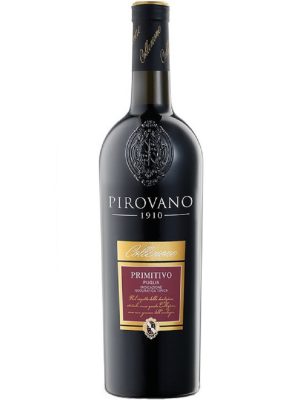
Amadio Pirovano opened the tavern “Da Pirovano” in the mid-800s, selling wine bought mainly from small farmers in southern Italy, especially in Puglia. Today, the fourth generation, with commitment and dedication, continues the growth and development of the family business.
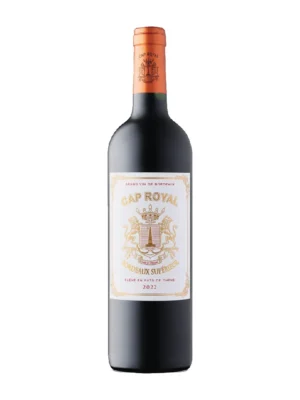
Cap Royal takes its name from the royal Cordouan lighthouse, the oldest lighthouse of Europe, situated at the entrance of Gironde Estuary. This 14th century beacon once signalled safe passage to Bordeaux wine merchants, returning home after sharing the great wines of Bordeaux with the world. Cap Royal benefits from the expertise of Jean René Matignon, winemaker of Château Pichon Baron, Grand Cru Classé Pauillac.
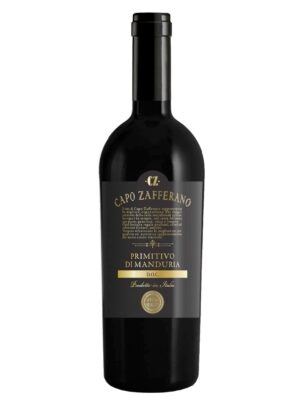
Capo Zafferano is a famous promontory, with a magnificent view of the gulf with turquoise water and a centuries-old white lighthouse, so characteristic to represent the best expression of the wines of Southern Italy: the wines of Puglia.
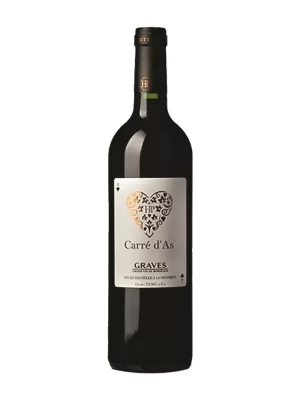
Originally from Schönberg, in the Rhineland, fleeing the consequences of the defeat of Napoleon I, the Yung family origins settled for more than a century in Algeria. Already listed in the first edition of Féret des Vins d’Oranie in 1886, the family developed its vineyard until independence, until forced to abandon the wine estates it had owned since 1859.
In 1862 Charles Young joined his older brother, already settled in Gironde. He then decides to acquire for his 2 children and his 2 nephews, the Château Haut Mondain, a 42-hectare AOC Bordeaux wine estate, followed then by Château Barail, Les Hauts de Palette and Moulin de Tassin.
Since 2020, the Charles Yung & Fils vineyards have been committed to a societal and environmental approach by obtaining High Environmental Value (HVE), level 3 certification.
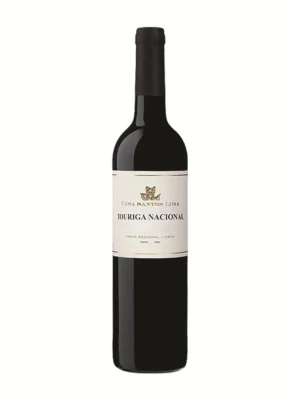
Casa Santos Lima was created to ensure the continuous development of Santos Lima’s wine producing activity created several generations ago. This activity was first started by Joaquim Santos Lima, who, by the turn of 19th century, was already a great producer and exporter of Portuguese wines. Still a family owned company, today is present in the regions of Lisboa, Algarve, Alentejo, Vinho Verde and Douro.
Coming from vineyards grown on smooth sun-kissed slopes, of clay and limestone soils with evident traces of marine fossils, this wine was produced exclusively from Touriga Nacional grapes and shows the excellent characteristics of the variety offering an excellent concentration in colour and aromatic intensity.
Juan Cúneo Solari founded Casas del Bosque in 1993, at a time when the Chilean wine industry was pursuing quantity over quality. His commitment to quality is evident in the Gran Reserva Cabernet, a wine which is a great exponent of this characteristic variety of Chile that finds one of its most typical expressions in the Maipo Valley.
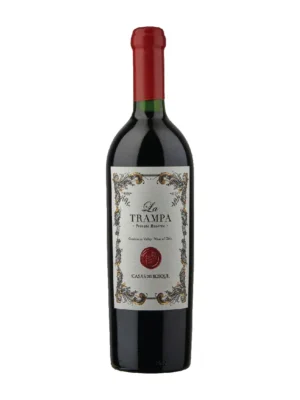
The origin of “La Trampa” dates back to the early 2000’s, when the dream of the “Great Chilean Cool – Climate Red” began to take shape through an innovative proposal of planting low-yielding Syrah on granitic soils at the top of the hills. Later, advances in topography and knowledge of the vineyards led the team to plant Malbec in the same soils and in another part of the hill facing east, where the best Pinot Noir were already cultivated.
Over the years, experience showed that complementing our Syrah with Malbec and, later, Pinot Noir would give rise to this great wine, achieving a deep finesse and elegance like no other blend from a cold climate.
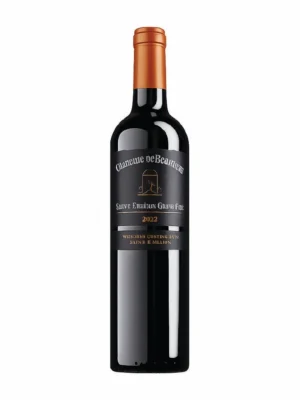
Created in 2021, Chanoine de Balestard, the second wine of Château Balestard La Tonnelle, is named after Balestard, a canon of the Chapter of Saint-Émilion. Derived from a strict selection during blending and young vines of the estate, Chanoine de Balestard, with its roundness, balance, and freshness, can be enjoyed from a young age.
Discover the Chanoine de Balestard 2022, an elegant and complex red wine from the Bordeaux vineyards. This vintage offers beautiful aromatic depth and a refined tannic structure, ideal for lovers of fine wines.
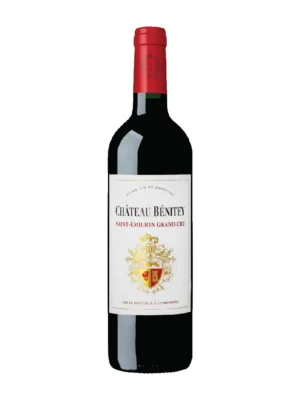
Château Bénitey is located at the foot of the coast, east of Saint-Emilion, in the town of Saint-Laurent des Combes. It takes its name from a cross at the junction of the road above the vineyard, a cross reminiscent of that of a holy water font.
The area is 5 ha with vines whose average age is 40 years and the wine is usually composed mainly of 70% Merlot, aged for 10 months in French oak barrels (20 to 40% new).
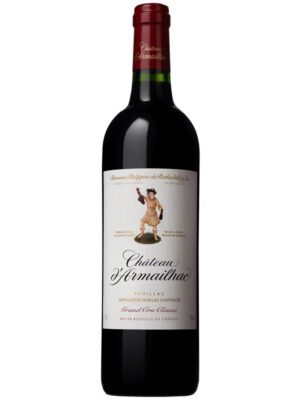
Château d’Armailhac is not only a beautiful setting but also a vibrant working and meeting place for the three Pauillac estates and their beating heart.
A place that reflects the identity of Château d’Armailhac, a combination of timelessness, local roots and elegant sobriety. The owners wanted to create buildings that would look as though they had always been there. As a result, Château d’Armailhac blends seamlessly into the Pauillac winegrowing landscape.
Typically for a Pauillac wine, Cabernets predominate in the blend. However, the relatively high proportion of Cabernet Franc is a hallmark of Château d’Armailhac. The wine is defined by a kind of elegant classicism, discernible whatever the vintage.
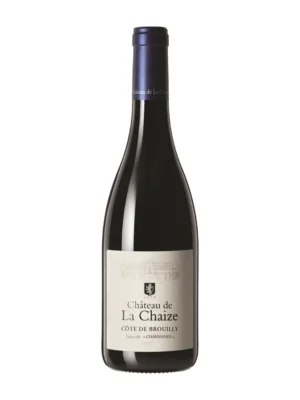
Located in Odenas (Rhône), the Domaine de la Chaize extends over 250 hectares, including 99 hectares of vines, which makes it the largest property in one piece in Beaujolais cru. Today, the Château is the emblem of the most prestigious Beaujolais Cru estate.
This single-parcel cuvée comes from vines nestled on the western slope of Mont Brouilly. This Côte-de-Brouilly cru stands out for the uniqueness of its soil: the parcel, with slopes ranging from moderate to steep, features a highly porous surface soil with a high sand content, encouraging deep root penetration. It is an exceptionally high-quality terroir, dominated by pink sands derived from granite.
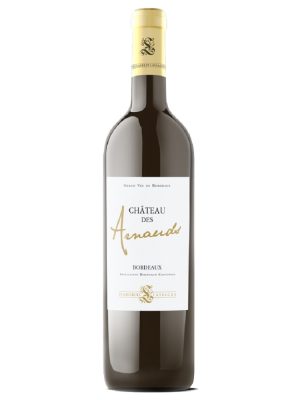
Vignobles Lassagne gather several family properties that were bought since three generations and are grown according to tradition and innovation on unique terroir located in the Libourne area.
Vignobles Lassagne encompasses these three properties: Château des Arnauds (the original estate), Château des Landes and Château Maltus, the latest addition to the Vignobles Lassagne.
The soils and basements of the Château des Arnauds located in Abzac, are composed of gravel that can be red with a caliber between fine pebble and coarse sand. Sometimes the gravel is mixed with the clay, sometimes they follow one another in layers. The pebbles flush with the surface allow the sun to reflect on the grapes, thus allowing excellent ripeness. This vineyard developed by father Daniel Lassagne, is located on a beautiful, south-facing plateau of red gravel around the town of Abzac, and being a 100% Merlot varietal, it prodeuces a wine of beautiful balance of roundness and structure.
Cherry-picked by Mathilde Chapoutier Selection, the Château des Ferrages domain is in Pourcieux, in the prime plots of the Sainte-Victoire appellation.
It is here that Côtes de Provence wine finds its unique origins.
Vin biologique – Organic wine.
For more info, visit Château des Ferrages by M. Chapoutierwebsite.


 Download Tasting Note