This property is located in Etauliers, north of the Gironde 1er Cotes de Blaye, on a clay soil and sandy grave on 13 hectares in production. The wines of Chateau Thomas Laurent are predominantly from the Merlot grape that gives soft and round structure to the wine.
VARIETALS
70% Merlot, 20% Cabernet Sauvignon, 10% Cabernet Franc
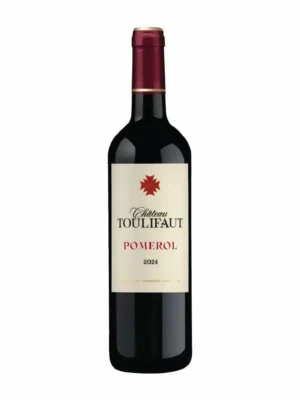
In 1972, the property itself was purchased by the Famille Jean-François Janoueix, managers and owners of prestigious Saint-Émilion and Pomerol estates since 1898. Janoueix wines have been served to presidents and dignitaries during official state dinners. The reputation of the La Croix-Toulifaut vineyards stretches even further back to the Middle Ages when the religious pilgrims of Saint Jacques gathered in front of the stone cross of La Croix Toulifaut as part of their devotions. The same cross still stands today and serves as a landmark for this vineyard. The very name Toulifaut has its roots in the old Latin French phrase “tot li falt” or “tout y faille” (everyone will give way). History has it that even the most pious person cannot help but be drawn to Pomerol from these vineyards.
ChâteauToulifaut (often listed as Château La Croix Toulifaut) is made from 100% Merlot and carries the winery’s long history of craftsmanship and patience. To the credit of the entire region, the wine shows how the history of the area and the winery’s commitment can be united in a pure and balanced wine experience from Bordeaux. This wine has been called the “Princess of Pomerol” by Jean-Luc Pouteau, the best sommelier in the world, based on its feminine representation of the appellation’s characteristics.
In the small village of Liginiac in Corrèze, the Moueix are recognized and respected for having lived by and passed on two core values, essential to success: Discretion and Hard Work. When Antoine Moueix (1796 – 1874), the first of the namesake, settled with his family in Lieu-dit Manzac on the Millevaches plateau, he had no idea that his descendants would establish one of the biggest wine dynasties in Bordeaux and California.
Today, Antoine Moueix Propriétés walks in the footprints of their founder: discretion and hard work, passion for great terroir, good agricultural sense and social responsibility, for transmission of expertise and the pursuit of excellence in all areas.
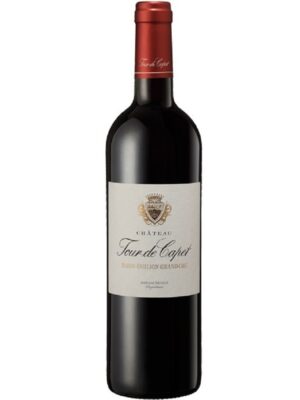
Vinified within Château Capet-Guillier, Tour de Capet enjoys its own unique terroir, lending the wine identity and character.
The sandy-silt soil produces wines of great finesse, which draw character from the well-balanced structure and round-bodied nature of Merlot.
For more info, visit Antoine Moueix Propriétés website.
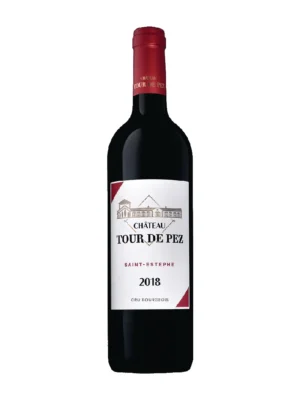
Château Tour de Pez is situated in the prestigious hamlet of Pez in the Saint Estèphe appellation, the internationally revered icon of viticulture. Its history is multi-facetted, deeply entwined with those of the families that have toiled in these vineyards since the 17th century.
Recognized from the outset as a Cru Bourgeois du Médoc, Château Tour de Pez is the result of the strict selection of the finest grapes from the estate to produce a wine that first and foremost asserts its Saint Estèphe identity, expressing its origins and its terroir with intensity. Polished by expert, precise winemaking, and mellowed through contact with oak, it offers amazing finesse of tannins, silkiness, balance, and superb freshness that lingers in the mouth. An accomplished, accessible Cru Bourgeois from Saint Estèphe, that offers unsurpassed value and infinite tasting pleasure.
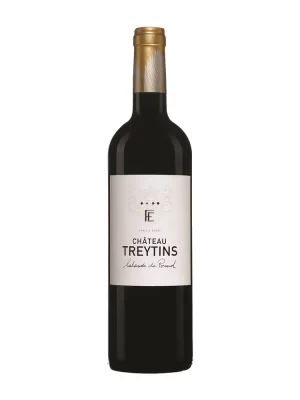
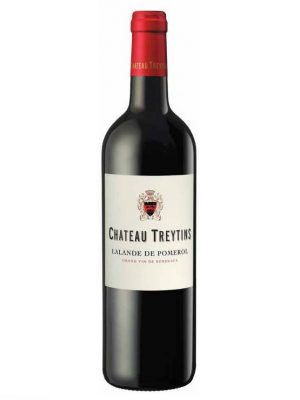
On a vineyard created in the middle of the 19th century by the Count of Kermartin, Léon Nony founded Château Treytins in the 1950s. After his death in 1959, his son Michel and then his grandson Jean-Marc continued his work by developing his vineyards. During the 1990s, the cellars were enlarged and completely renovated to take into account new techniques and the latest knowledge in winemaking and maturing, while respecting traditional achievements. Château Treytins, vinified on the fruit, benefits fully from the temperature regulation in these air-conditioned cellars.
On a vineyard created in the middle of the 19th century by the Count of Kermartin, Léon Nony founded Château Treytins in the 1950s. After his death in 1959, his son Michel and then his grandson Jean-Marc continued his work by developing his vineyards. During the 1990s, the cellars were enlarged and completely renovated to take into account new techniques and the latest knowledge in winemaking and maturing, while respecting traditional achievements. Château Treytins, vinified on the fruit, benefits fully from the temperature regulation in these air-conditioned cellars.
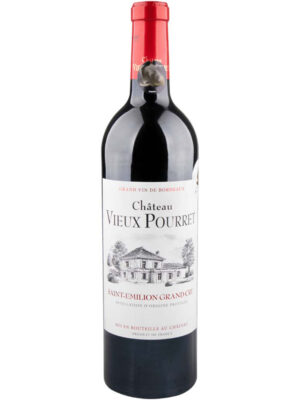
Located near the medieval town of Saint-Émilion, this 8.5-hectare estate is not following anymore biodynamic agriculture, but still emphasizing sustainable and artisanal practices to create an elegant, mineral-driven, and aromatic wine.
The Château Vieux Pourret Saint-Émilion Grand Cru AOC of this vintage is a Merlot-led Bordeaux red, highlighting succulent berries, spice, and toasted oak with a velvety, structured palate.
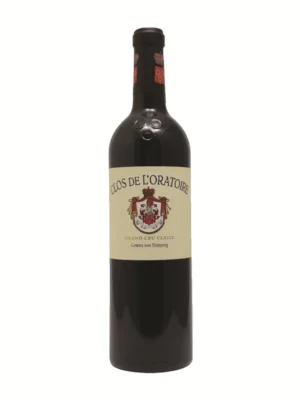
Clos de l’Oratoire, located on Saint-Emilion’s northeast slope, has 13 hectares of vines. The terroir of Fronsac molasse, consisting of a layer of sandy soil and a clay subsoil, is ideally suited to Merlot (80% of the vines).
Clos de l’Oratoire is round, smooth, and very seductive. It has a beautiful deep crimson colour and powerful fruity aromas. Merlot provides roundness and opulence, whereas Cabernet Franc contributes power, aromatic complexity, and a long aftertaste. Although Clos de l’Oratoire can be enjoyed seven years after the vintage, it is, above all, a wine with fine ageing potential.
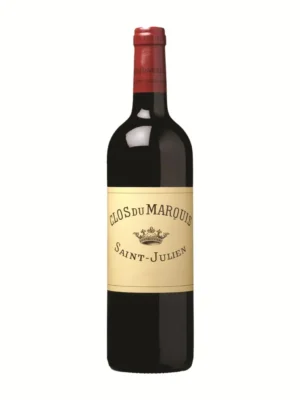
The name of Clos du Marquis, created in 1902, was inspired by the Petit Clos adjacent to the Château de Léoville, residence of the Marquis de Las Cases. The Clos du Marquis is produced from top terroirs of the Saint-Julien Appellation that were not exclusively part of the old Domaine de Léoville cadastre. These terroirs are located slightly to the west and are surrounded by prestigious Classified Growths, particularly Seconds Crus Classés of Saint-Julien and Pauillac : Léoville Poyferré, Léoville Barton, Pichon Longueville Comtesse de Lalande… The Clos du Marquis offers a fine expression of the Saint-Julien character : structure, complexity, harmony, distinction and ageing potential.
Structured, direct, and intense, the 2021 Clos du Marquis has a strong identity that owes much to the elegance and power of the Cabernets, which perform well in this vintage. This wine displays complexity, aristocratic stature, and an airy, inviting elegance that lingers on the finish.
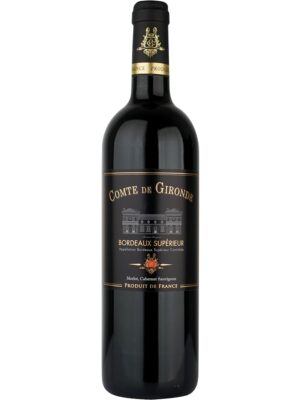
Comte de Gironde has been owned by the Comin family for over a hundred years and since 2003 it is one of the daughters and her husband who together run the business with plantations of around 50 hectares of vines. The vineyard spans three municipalities in the appellation Entre-Deux-Mers on lands that are characteristic of the region’s terroir, full of muddy limestone. Soil that is very favorable for growing both Sauvignon Blanc for white and Merlot and Cabernet Sauvignon for reds.
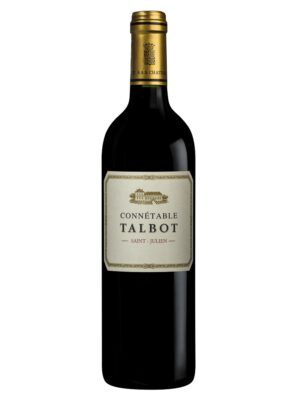
Legend relates that the name of this imposing estate originates with Connétable Talbot, a famous English warrior, defeated at the battle of Castillon in 1453. Talbot is one of the Medoc’s oldest estates, its glory never tainted. Through the years, it has been fortunate enough to remain in good hands. The owners are Nancy Bignon-Cordier and her family. They are the fourth generation of Cordiers to manage this Saint-Julien fourth Classified Growth.
For many, Talbot embodies the ideal Saint-Julien, a generous bouquet, extremely stable and dependable during aging, a champion of longevity; even young Talbot is pleasant and rounded, always characterized by silky, mild and very civilized tannins. Talbot possesses an expansive character. It’s never withdrawn into itself and has the courtesy of being in a good mood every day.
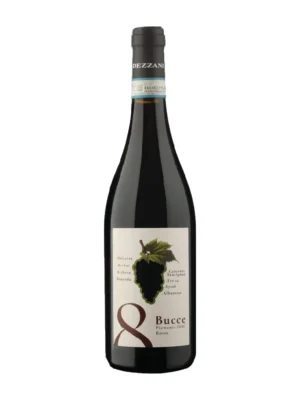
The Dezzani Winery was founded in 1934 in Cocconato, in the province of Asti. The town is located 491 meters above sea level on the renowned Riviera del Monferrato. The history of our wines is closely linked to this territory, to its ideal microclimate for growing unique vineyards, and to its authentic tradition. The historical remains of Romanesque, Gothic, and medieval architecture frame the rows of Barbera, Albarossa, Cabernet, and Syrah, making the landscape even more captivating.
The name “8 Bucce” celebrates the uniqueness of this wine, crafted from a masterful blend of eight grape varieties. The native Piedmontese varieties, Barbera, Dolcetto, Freisa, Bonarda, and Albarossa, are elegantly combined with Merlot, Syrah, and Cabernet Sauvignon, lending depth, roundness, and structure. This wine reflects a vision where tradition and modernity merge into a timeless style, embracing a philosophy that honors native Piedmontese grapes while integrating international varieties to create unique and distinctive blends.
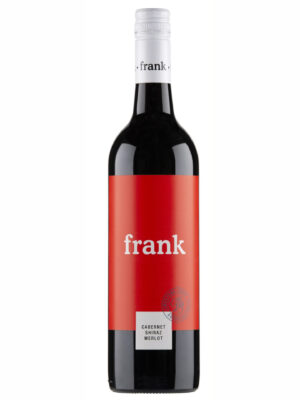
In March 2002 the DiGiorgio Family became the proud owners of the second oldest winery in Coonawarra. This winery had been known since the early 1950’s as ‘Rouge Homme’ and holds enormous importance within the ‘winescape’ of Australia.
Being frank, this wine is made to be enjoyed with the best of food, family and friends. The finest red varieties of the estate have been blended to create a complex and alluring wine, packed with dark fruit flavours and balanced by subtle oak.
Frankly, this red is superb!
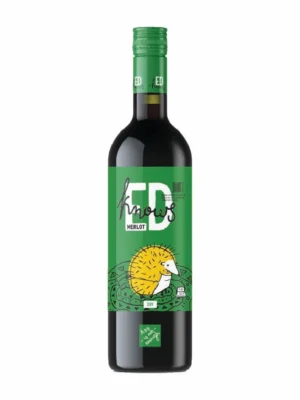
A collection of wines with individual character. The concept of this brand is to actively interact with consumers, communicating in their own way through different characters, taking into account the individuality and preferences of consumers.
Merlot in French means The Little Blackbird. This is an approachable grape variety and is often recommended as the first red for someone new to red wines. Known for being soft, ripe and elegant, Merlot is an easy red that goes well with food, or on its own.
Always available to couple up… with a nice dish, good mood, and great company.
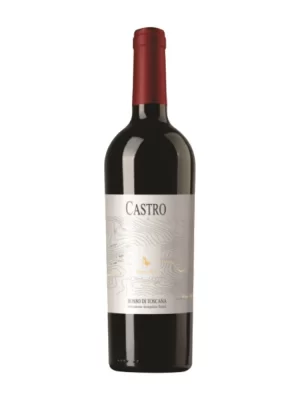
Fattoria Il Muro has been owned by the Pancaro family for about 200 years and has always been dedicated to viticulture, thanks to the favorable environmental conditions. The presence of soils rich in galestro and the climate, characterized by strong temperature variations due to the proximity to the Alpe di Poti, create a micro-environment that enhances the organoleptic qualities and healthiness of the grapes. This allows for the adoption of environmentally friendly cultivation practices. The vineyards and olive groves extend mainly on hilly terrain that gently slopes towards the valley plain of the Castro stream.
The name of the wine is dedicated to the Castro torrent, a mountain torrent that flows down by our vineyards.
It can be consider a Baby SuperTuscan because of its «traditional» SuperTuscan blend, but unlike “Senior” Supertuscan wines, ageing takes place in used barrels and only for 6 months, so it remains fresh and extremely easy to drink.



 Download Tasting Note