Fattoria Il Muro has been owned by the Pancaro family for about 200 years and has always been dedicated to viticulture, thanks to the favorable environmental conditions. The presence of soils rich in galestro and the climate, characterized by strong temperature variations due to the proximity to the Alpe di Poti, create a micro-environment that enhances the organoleptic qualities and healthiness of the grapes. This allows for the adoption of environmentally friendly cultivation practices. The vineyards and olive groves extend mainly on hilly terrain that gently slopes towards the valley plain of the Castro stream.
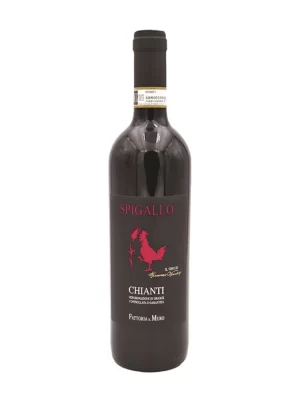
At Fattoria Il Muro they started to call their Chianti, Spigallo, in 2011, when they changed the farm’s image and decided to adopt a cock pecking a sheaf of wheat as their logo. The decision was made because they found this picture in their villa since in the past it was used as the family crest. The name Spigallo is a pun because it’s the union for the Italian words “spiga” (sheaf of wheat) and “gallo” (cock) which are both in the final, symbolic logo.
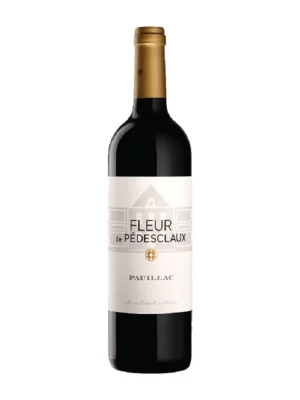
Like all the greatest wines of the appellation, Château Pédesclaux has the complexity that reflects the terroir it springs from. On this mosaic of soils, the clays convey power while the gravels express pure elegance. Pédesclaux embodies the depth that is the quintessence of Pauillac, balanced by a unique sensuality with each vintage, the painstaking work on these excellent plots pays off, while the revolutionary equipment in the winery enables the wine to develop its own unique personality.
Ethereal, fresh, appealing to both the nose and the palate, Pédesclaux’s second wine is a flower that unfurls as you approach. Unusually for Pauillac, the Fleur de Pedesclaux is predominantly made from Merlot along with a dash of Cabernet Sauvignon, Cabernet Franc and Petit Verdot depending on the vintage.
Exhibiting a more high-spirited elegance yet nonetheless showing remarkable length, Fleur de Pédesclaux 2016 is a delight. In this more floral expression, the marvellous complexity of our terroir is once again evident, but in a mouth-watering style that is instantly festive.
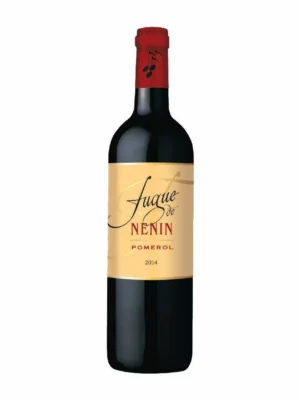
Château Nénin is located in the village of Pomerol, one of the most prestigious areas of Bordeaux. The Domaine was bought by Jean-Hubert Delon in 1997 from his cousins, the Despujols, owners of the estate since 1847. Jean-Hubert had the intention of continuing the centuries-old tradition of the Château, and precisely for this reason, since immediately, extensive renovation and modernization works, including technical ones, were carried out. Under his direction, the land was in fact drained, the vineyards renewed and the cellars modernised, to improve the vinification and aging processes.
Fugue de Nénin was created and first sold in 1997. Fugue comes from sandy-clay soils found in the eastern part of the Château’s vineyards, as well as from the young vines. This second wine is a typical example of the charm of Pomerol. The wines are smooth and silky and can be enjoyed earlier than those of the Grand Vin.
The 2014 Fugue de Nenin is a soft, fruity wine to drink now, a relatively fresh, open style.
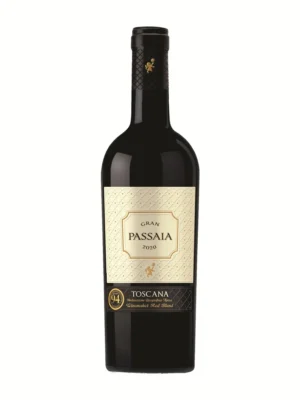
The name Cielo e Terra (literally Sky and Land, or Heaven and Earth) recreates a perfect marriage, where Heaven is represented by the family of the same name and the Land is identified with the expert hands of the winegrower partners working in the vineyards that yield these wines.
The grapes for this magnificent Toscana IGT red undergoes the traditional winemaking practice of slow fermentation of the fresh drawn-off wine which is combined with light drying of grapes, to give a softer and more modern taste.
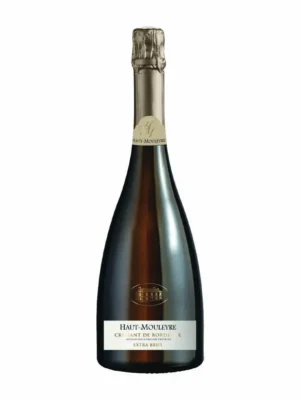
Located in the village of Escoussans, near Cadillac on the right bank of the Garonne River, Haut-Mouleyre produces a diverse range of sparkling, red and white wines.
Haut-Mouleyre Crémant de Bordeaux Extra Brut is a crisp, refreshing French sparkling wine produced in the Bordeaux region, which highlights the region’s sparkling winemaking tradition using the méthode traditionelle (the identical bottle-fermentation process used in Champagne).
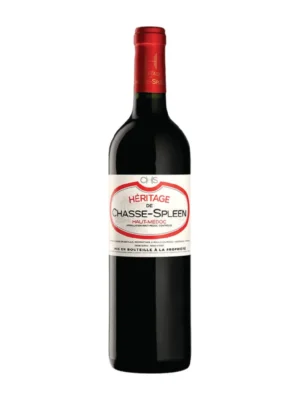
The Héritage de Chasse-Spleen Haut-Médoc is the second wine of the renowned Château Chasse-Spleen.
At first known as Ermitage de Chasse Spleen, this wine had to be given a new name in 2000 because of homonymy reasons. After a birth under the best auspices while inheriting all the care brought to its magnificent senior, this new name seemed very much appropriate.
It is crafted from younger vines and specific parcels within the Haut-Médoc appellation, offering a more accessible version of the estate’s signature style.
For more info, visit Château Chasse-Spleenwebsite.
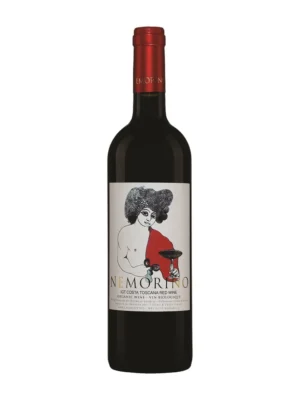
L’Elisir D’Amore is an Italian 19th century opera buffa by Gaetano Donizetti. It tells the story of the charlatan pharmacist Dulcamara whose “love filter”, in truth a bottle of Bordeaux, helps Nemorino conquer the heart of the beautiful Adina despite Belcore’s interference. A complex tale of ploys and passion, with the sweet tones of love and the bitter taste of jealousy – it offers a representation of wine as a powerful love filter that is fitting with the charming wisely-balanced intensity of I Giusti & Zanza wines.
The Red Nemorino’s composition varies slightly from vintage to vintage. It is primarily composed of Syrah (about 60%), with additions of Merlot and Sangiovese, as well as small shares of Alicante, according to the vintage.
The agricultural conduction is organic and biodynamic in the vineyards.
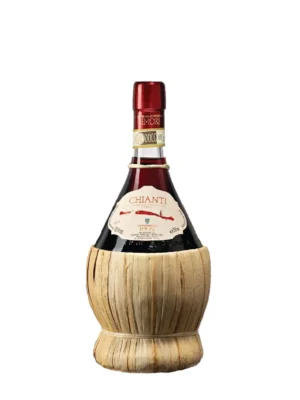
In the early 1970s, when farmers were still leaving the countryside to flock to the city, the Giannelli family began renewing the crops of the small I Mori farm, which has gradually expanded since then.
This Chianti in a typical “fiasco” straw bottle is produced in the I Mori vineyards that extend across the Florentine hills, at an altitude of 250 meters above sea level.
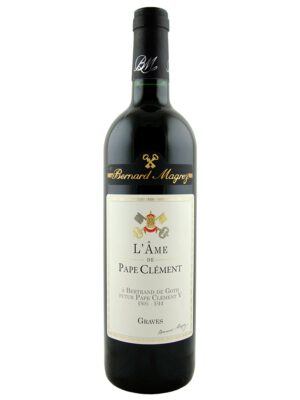
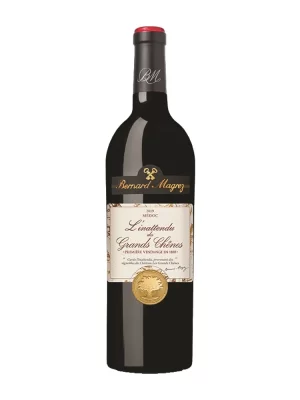
Bernard Magrez’s journey is that of passion, a constant desire for improvement, know-how and exceptional success which has its roots first in Bordeaux, in the Grands Crus Classés, then in other prestigious terroirs in France and around the world.
L’Âme de Pape Clément’s vineyard is nestled in the heart of the Graves region, on the left bank of the Garonne River where the soil and climate are ideal for grapes to ripen and vines to flourish. Dig down into the subsoil and you’ll find gravel and a layer of clay and limestone, which absorbs the sun’s heat during the day and releases it at night to produce remarkably full, ripe grapes. What’s more, the nearby river and the vineyard’s exposure to the sun help create a microclimate which helps protect and nurture the vines.
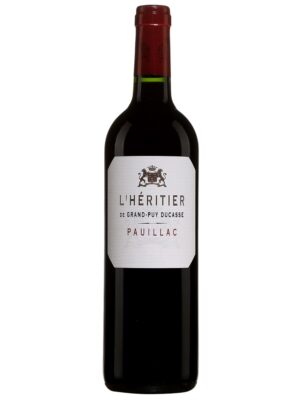
Three large plots in the best parts of Pauillac form the vineyard of this classified growth, an unusual configuration and a direct inheritance from the estate’s founder, Pierre Ducasse, an eminent lawyer. In the 18th century he gave a single name to a fine vineyard holding, which was put together through inheritance and purchases. When he died in 1797, his son, Pierre, inherited a 60-hectare exploitation, named Ducasse-Grand-Puy-Artigues-Arnaud, of which two third were planted with vines. The estate was classified in 1855, under the name of Artigues Arnaud.
L’Héritier de Grand Puy Ducasse is the second wine of Château Grand-Puy Ducasse. A distinguished red wine that embodies the classic elegance of the Pauillac AOC with rich flavors and refined tannins.
For more info, visit Château Grand-Puy Ducassewebsite.
Bernard Magrez’s journey is that of passion, a constant desire for improvement, know-how and exceptional success which has its roots first in Bordeaux, in the Grands Crus Classés, then in other prestigious terroirs in France and around the world. Bernard Magrez’s journey is that of passion, a constant desire for improvement, know-how and exceptional success which has its roots first in Bordeaux, in the Grands Crus Classés, then in other prestigious terroirs in France and around the world.
Located in Saint-Christoly-Médoc, a town once renowned for its trading port that became a gateway to the world, “L’inattendu” des Grands Chênes is a wine that is both structured and smooth, making the most of its Garonne gravel terroir.
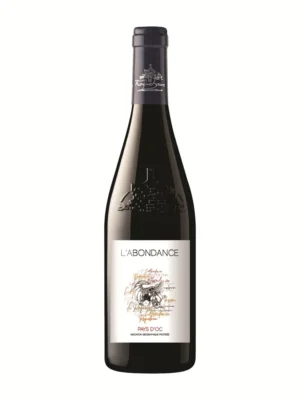
Located on a schist Terroir, typical of Languedoc, and with a very sunny Mediterranean microclimate, La Cave de Roquebrun produces wines in AOC Saint-Chinian-Roquebrun, AOC Saint-Chinian, AOC Languedoc and IGP Pays d’Oc, all original and high quality wines.
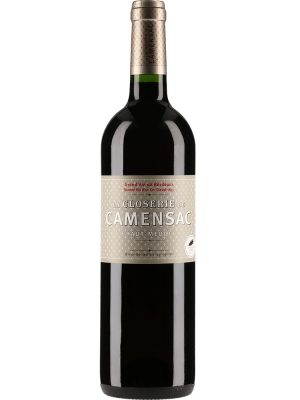
Located in the heart of the Haut-Médoc appellation, on the edge of the Saint-Julien appellation, the Château de Camensac covers 75 hectares. Purchased in 2005 by the Merlaut family, he benefits from the experience and know-how of the Château Chasse Spleen team, it regains its glory of 1855, when it was ranked 5th Grand Cru in the Bordeaux classification and its wines renew with the traditional quality of the castle.
La Closerie de Camensac is the second wine of Château de Camensac and it is a cuvée from the young vines which it enjoys the same careful care during the vinification as the great wine.
A wine with a captivating personality, La Closerie de Camensac offers the opportunity to taste a vintage from a Médoc classified vintage at a very affordable price.
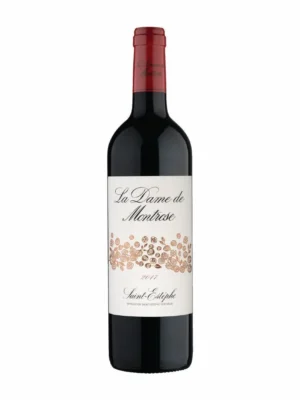
The history of Montrose, written in two centuries by three families of owners, is depositary of their spirit, marked by their quest of excellence and legendary vintages. Pioneers in the Médoc, visionary builders and wise managers, all these families knew how to work and valorise this unique terroir. The estate owes them the foundation on which Montrose builds its image today and its unique place in the world of exceptional wines.
Made from the same vineyard and with the same meticulous care as the Grand Vin, La Dame de Montrose, from a second selection, is a predominantly Merlot wine, supple and silky. Its pronounced red fruit aromas offer another expression of the terroir in a style all its own.
A reliable wine that expresses its maturity more quickly, this wine was created in 1983 in homage to Yvonne Charmolüe, who managed Château Montrose alone from 1944 to 1960. With production varying from year to year, this wine is aged for 12 months in 30% new barrels and represents on average 40 to 45% of the total production of the Montrose vineyard.
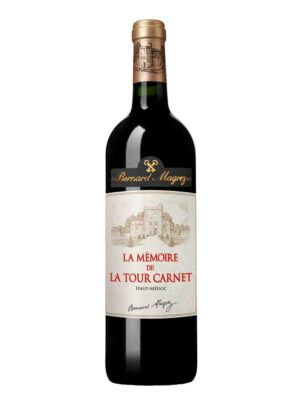
The history of La Tour Carnet merges with the history of France. Bearing the name of the squire who infallibly helped his Lord to resist French royalty at the end of the Hundred Years War, Château La Tour Carnet played a major role in the revolution of the Médoc vineyards and the quality of its wine, rewarded by the entry in the classification of Grands Crus Classés of 1855. The diversity of its terroir and the constant search for perfection make this Haut-Médoc an exceptional wine.
Since purchasing the estate in 2000, Bernard Magrez has returned the estate’s Château, cellars and 311 hectares to their glory days, marrying cutting-edge technology with traditional savoir-faire.


 Download Tasting Note